Skin & Ink · Tattoo Maintenance
The Real Reason Your Tattoo Looks Faded (Hint: It’s Not the Ink) — and the 2-Minute Fix That’s Making $500 Touch-Ups Unnecessary
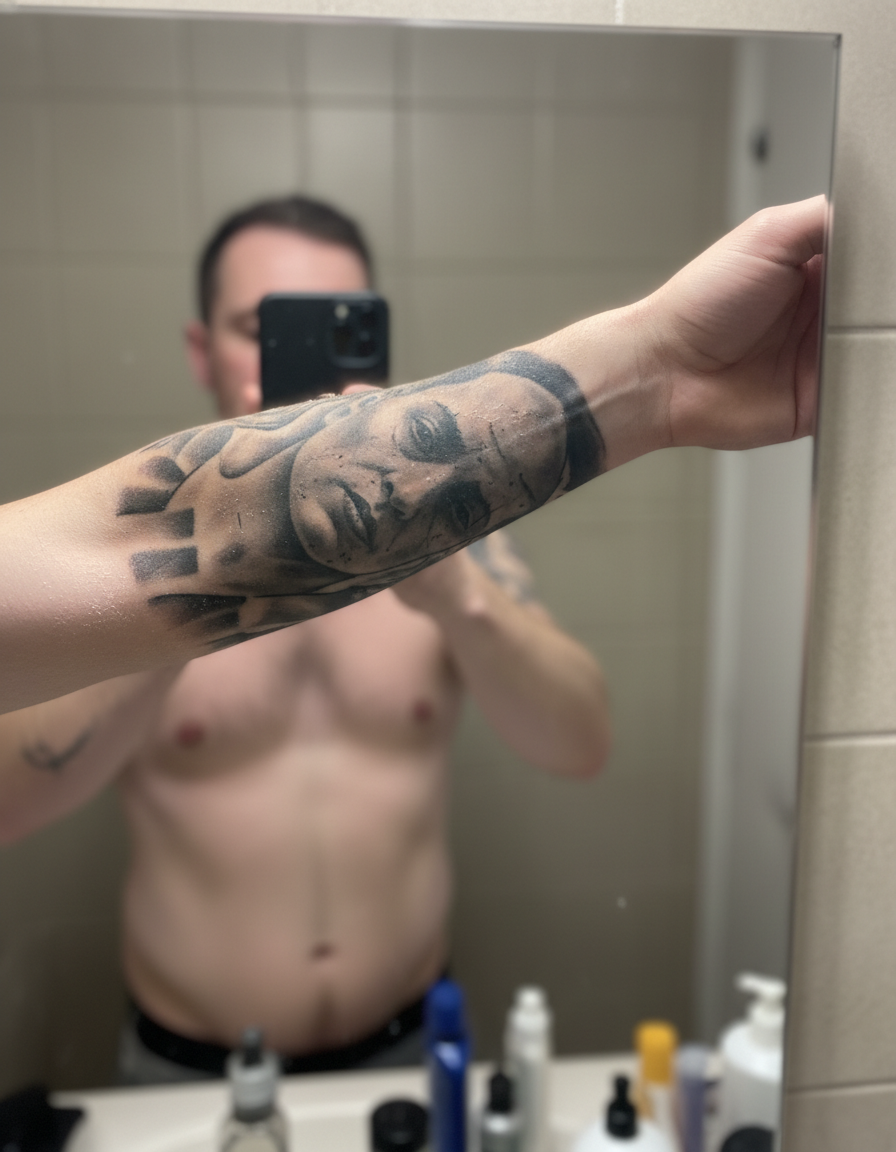
I stopped wearing short sleeves in June.
Not because of the weather. Because of my arm.
I have a half sleeve I paid $1,400 for four years ago — black and grey, a portrait piece, the kind of tattoo I used to roll my sleeve up just to show people at parties. Somewhere in the last year it started looking… off. Not damaged. Not scarred. Just tired. Grayish where it used to be black. Flat where it used to have depth.
My cousin has the same tattoo style, done around the same time, and hers still looks the way it did on day one. I asked her if she’d gotten it touched up. She said no. She said she just “takes care of it.”
I didn’t think much of that at the time. I figured mine was just older, or my skin didn’t hold ink as well, or it was one of those things you accept as part of getting tattoos — they fade, that’s just what happens.
Then I found out that’s not actually true. Not for most people, anyway.
It started small. It didn’t stay small.
At first it was just noticing the tattoo looked duller in photos than I remembered. Then it was catching my reflection in a store window and doing a double take, thinking “did that used to look better?” Then it was actively angling my arm away from good lighting at dinner because I didn’t want anyone getting a close look.
By summer, it had turned into something bigger than vanity. I stopped wearing short sleeves to the gym. I skipped a pool day with friends because I didn’t want to explain why my “cool tattoo” looked like a smudge. I found myself avoiding a piece of my own body that I used to be proud of.
And once I started paying attention, I saw it everywhere. Not badly done tattoos — good work, on people my age, that had gone grey and mushy in exactly the same way mine had.
I want to be clear — this wasn’t about the tattoo being “ruined.” It still had the shape, the lines were still there. It just looked like a photocopy of a photocopy. Like the life had gone out of it.
And I had no idea that the fix wasn’t a touch-up, or a new tattoo, or accepting the fade as permanent. It was something I’d been doing wrong — or more accurately, not doing at all — every single day since the tattoo healed.
What I tried first (and why none of it worked)
I want to walk through this because if you’ve got a tattoo that’s lost its edge, you’ve probably already tried some version of these:
-
Regular lotion
Felt nice for about two hours. By the time I checked my arm again, it looked exactly the same as before I applied it. Water-based lotions evaporate — they don’t stick around long enough to matter.
-
Aquaphor / Vaseline
This is what my artist told me to use right after I got the tattoo, so I figured it made sense to keep using it. It didn’t. Petroleum jelly is built to seal a fresh wound, not maintain healed skin — it sits on top like plastic wrap and doesn’t let your skin do anything on its own. Mine got shinier, not more vibrant.
-
Coconut oil
The internet’s favorite “natural” fix. Smelled great. Did basically nothing beyond a light shine that disappeared within the hour.
-
A “tattoo aftercare” balm from a big brand
This is the one that actually annoyed me, because it’s marketed like it’s for exactly this problem. Turns out almost every product in that category is formulated for the first two weeks after getting inked — healing a wound, not maintaining a tattoo that’s already years old. Different problem, different solution.
-
Doing nothing
Which is what most people end up doing, because nothing else worked and they assume that means nothing will.
None of these failed because I did them wrong. They failed because they were solving a problem my tattoo didn’t have.
The actual reason tattoos look faded
Here’s what I eventually learned, and it changed how I look at my own skin completely:
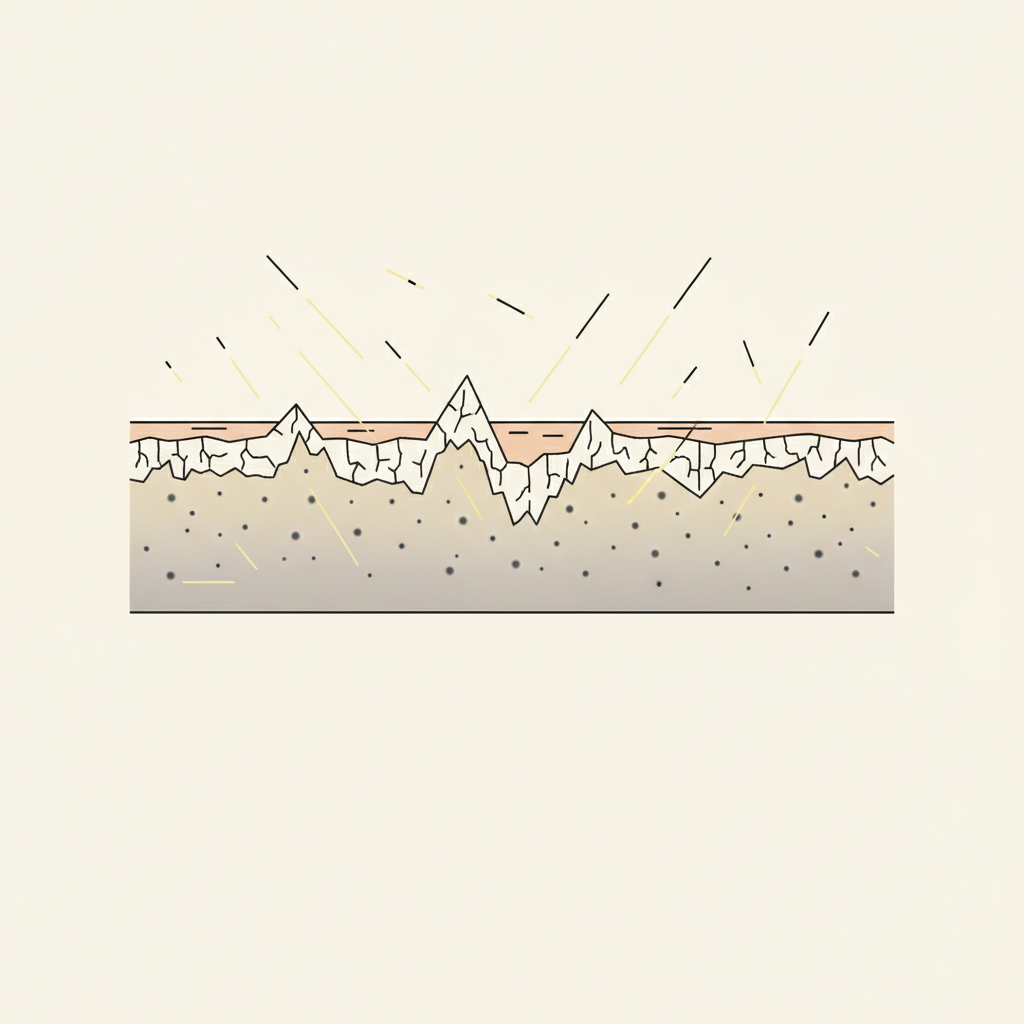
Your tattoo ink is sitting in your dermis — the second layer of skin, well below the surface. Ink particles don’t dissolve or evaporate on their own timeline just because a few years pass. They’re still there. What actually changes is the layer sitting on top of them: your epidermis.
When your epidermis is dry, it doesn’t lie flat. Dead skin cells build up, the surface gets rough and uneven, and instead of light passing cleanly through to the ink beneath, it scatters in every direction across that rough surface. That scattering is what reads as “faded” to your eye. Your tattoo isn’t disappearing — you’re looking at it through a layer of dry, light-scattering skin.
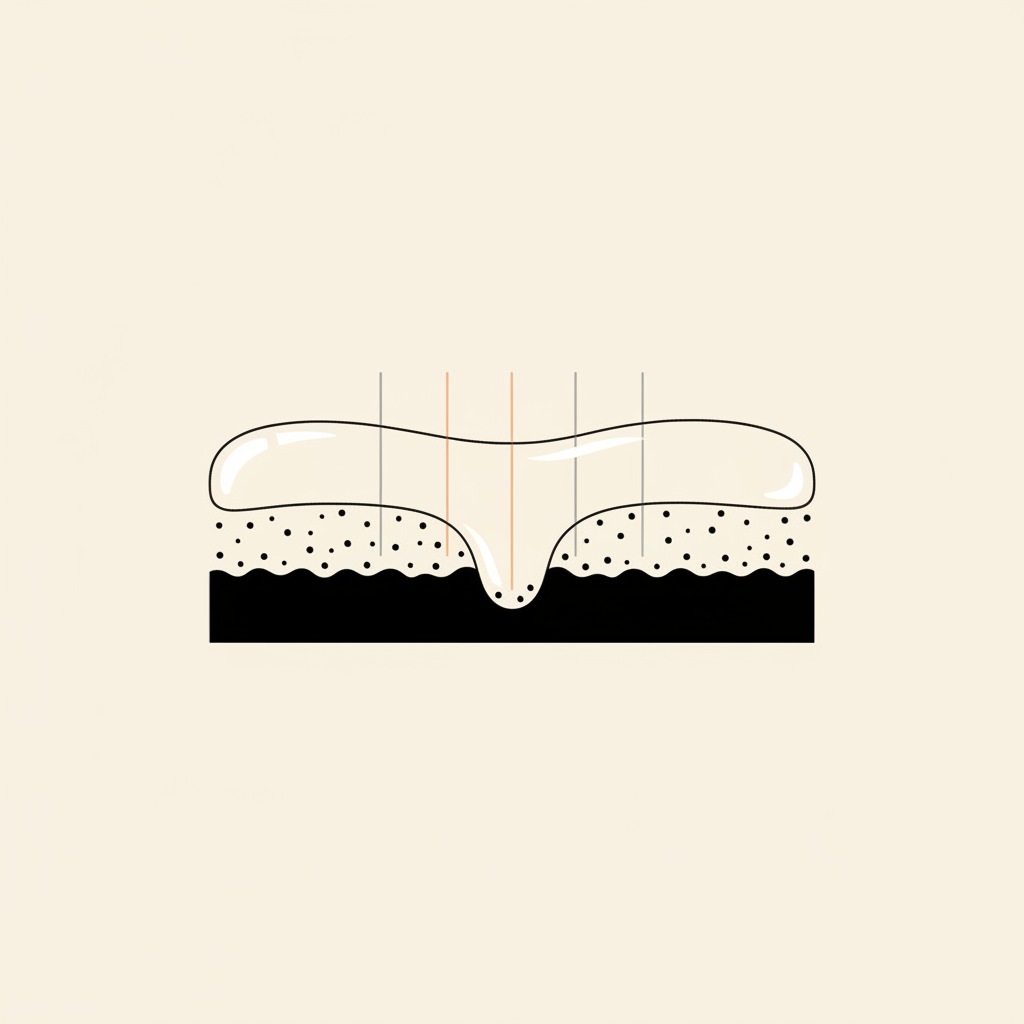
That’s also why the lotion trick sort of worked, temporarily. For the hour or two your skin was actually hydrated, the surface smoothed out, light passed through more cleanly, and the tattoo looked better. Then the water evaporated and you were right back where you started.
This is also why regular aftercare balms don’t fix it. They’re built to protect an open wound while it closes — completely different job than smoothing and maintaining skin years after healing. Nobody had ever formulated something specifically for the second problem, because most brands are stuck thinking about tattoos as wounds to heal instead of art to maintain.
The fix: feed the skin, not the wound
Once I understood that, everything about “tattoo care” stopped making sense the old way. I wasn’t trying to heal anything. I needed something built to keep the surface of already-healed skin smooth and hydrated, every day, long-term — not a one-time healing product.
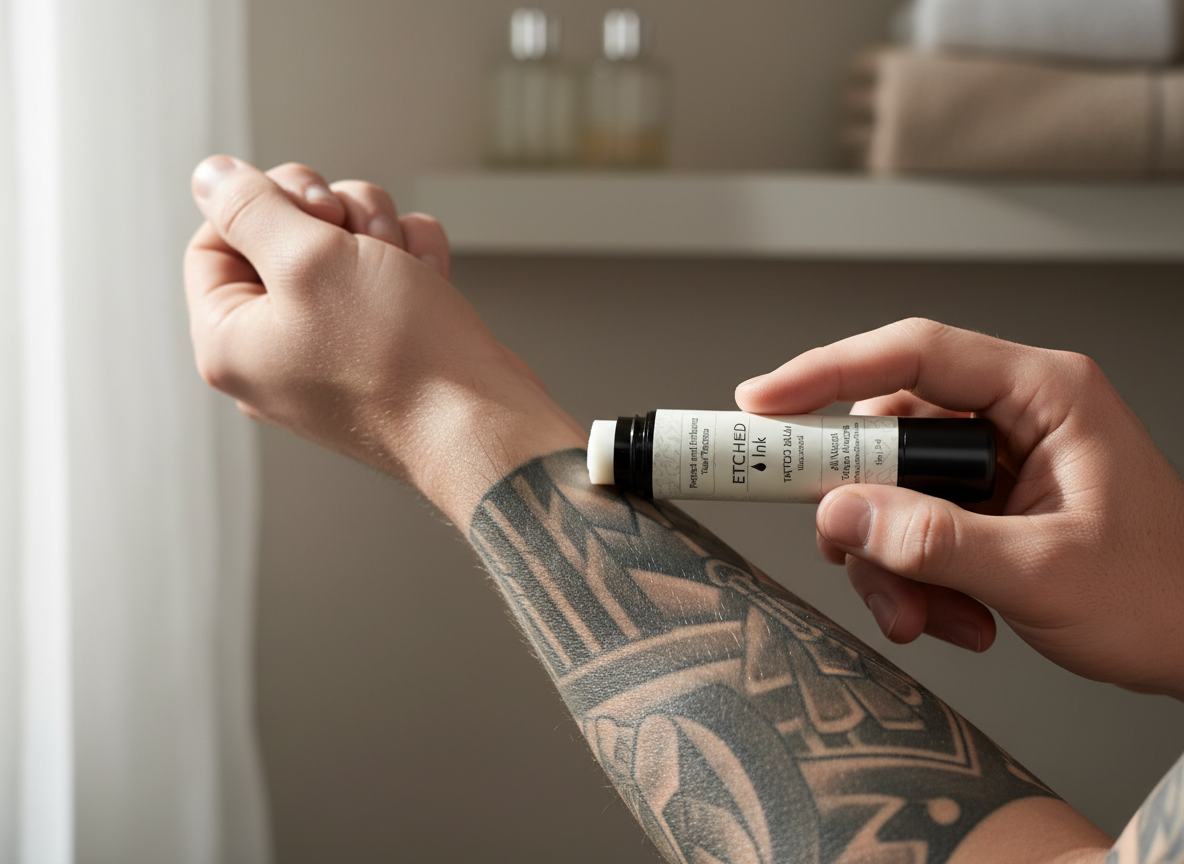
That’s what led me to Etched Ink. It’s not marketed as an aftercare product for new tattoos — it’s built specifically for tattoos that are already healed and just need daily maintenance. The formula leans on shea and mango butter to smooth the surface immediately, beeswax to actually lock that hydration in instead of letting it evaporate in two hours like lotion does, and ingredients like rosehip oil and vitamin E that support the skin’s health over the long run instead of just sitting on top of it.
The stick format mattered more than I expected too — no greasy hands, no jar to dig into, just twist and apply directly to the tattoo in about ten seconds.

Etched Ink · Tattoo Balm Tube
A daily balm stick for healed ink — not a healing ointment
- Shea & mango butter — smooths the surface on contact.
- Beeswax — seals hydration in so it doesn’t evaporate by lunch.
- Rosehip oil & vitamin E — long-term skin health above the ink.
- Ten-second stick — twist, glide, done. No greasy hands.
All natural · Petroleum-free · Paraben-free · No artificial fragrance · 15g / .5oz
What actually happened when I tried it
I’ll be honest — I was skeptical. I’d already been burned by “miracle” products before, and a stick under forty bucks that claimed to fix years of fading sounded like exactly the kind of thing that doesn’t work.
I applied it the first morning mostly out of curiosity, expecting the same nothing I’d gotten from every lotion and oil before it. Within about a minute, the tattoo actually looked darker — not dramatically, but noticeably, the way it does right after a shower when your skin’s briefly hydrated. I figured that was it, same temporary bump as always, and it’d fade back by afternoon.
It didn’t. I checked it that evening and it still looked better than it had in months. Not “new tattoo” better, but genuinely, visibly improved — the blacks looked more like blacks instead of charcoal gray.
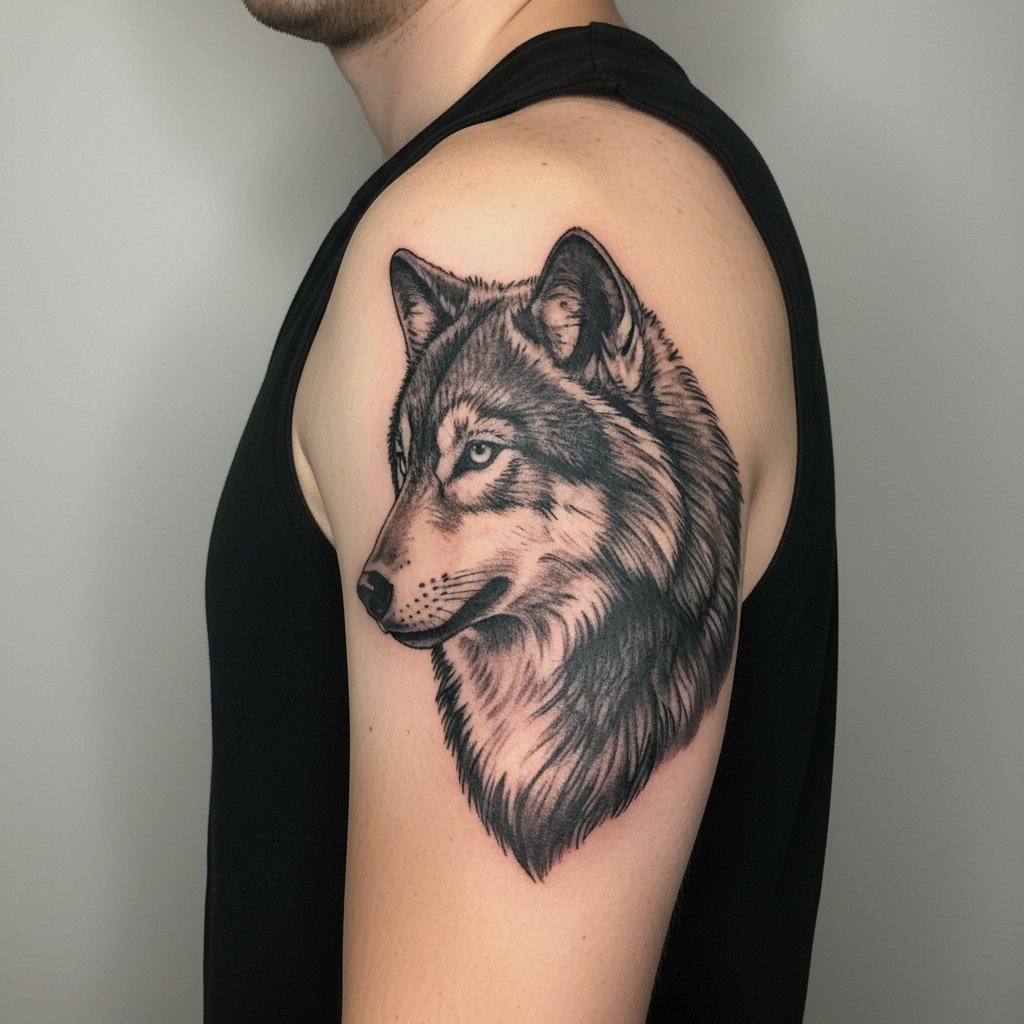 Before
After — 2 weeks
Illustrative comparison: one photograph of the same tattoo, with the “before” frame showing how a dry, light-scattering surface dulls the identical ink underneath.
I kept it up every morning after that, mostly to see if it would hold. By about two weeks in, my cousin — the one with the tattoo that never seemed to fade — actually asked me if I’d gotten mine touched up. I hadn’t touched a needle. I’d just been putting a $36.99 stick on it every morning.
That’s when it actually clicked for me: the tattoo was never gone. I’d just never given my skin a reason to let it show.
And it isn’t just my arm
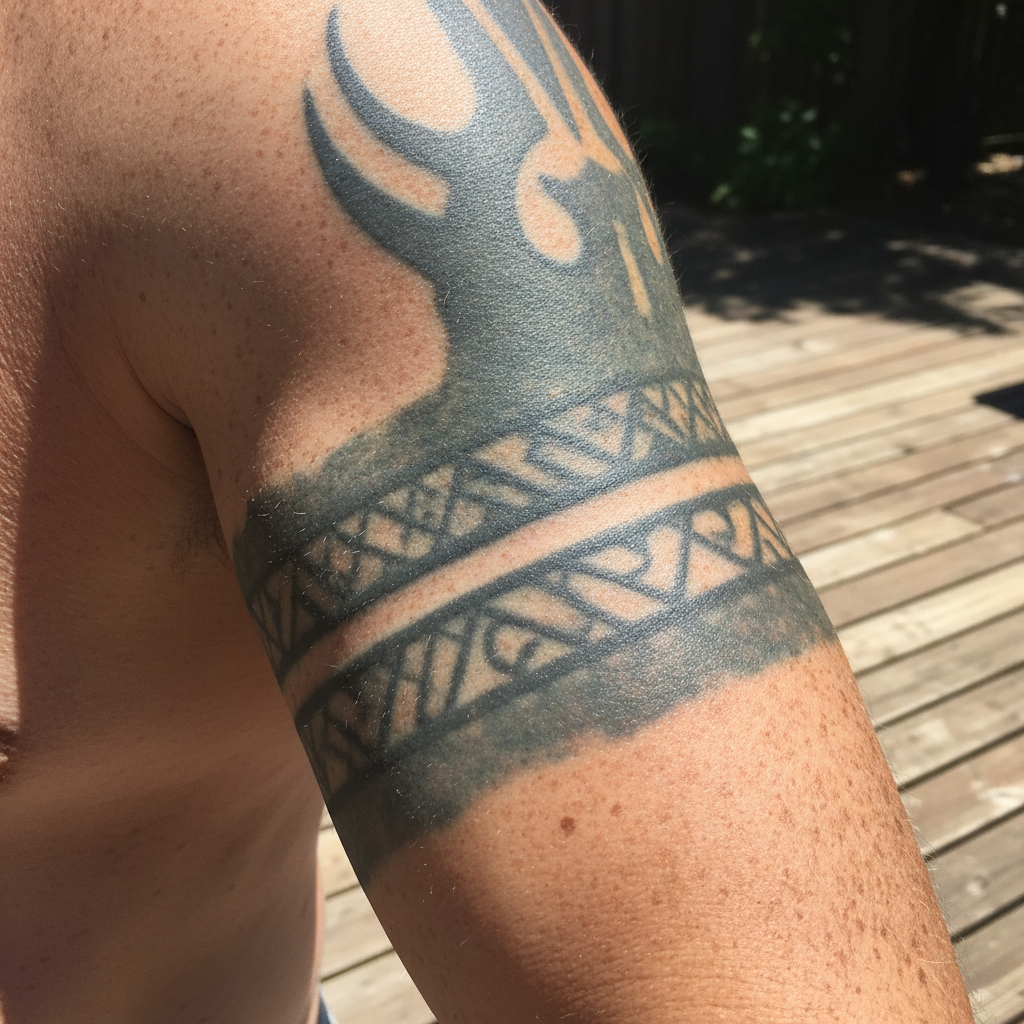
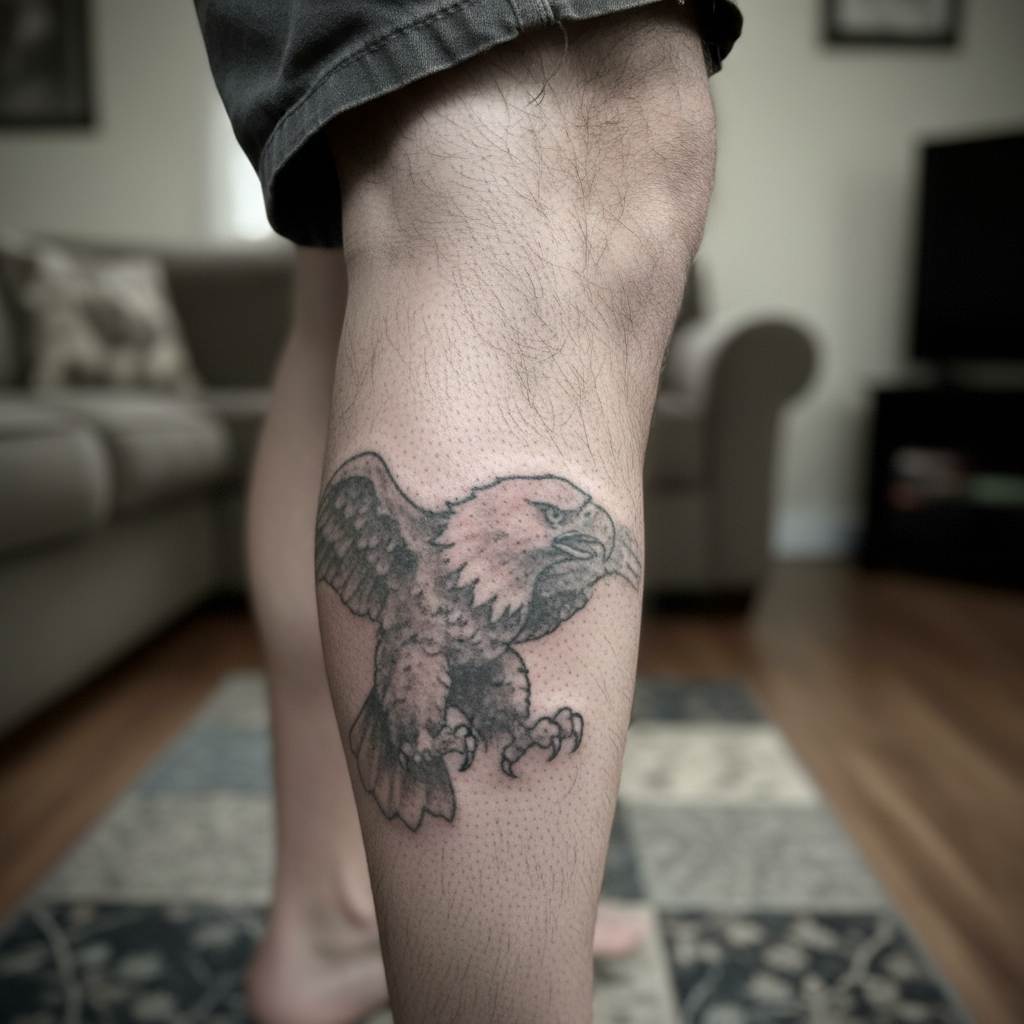
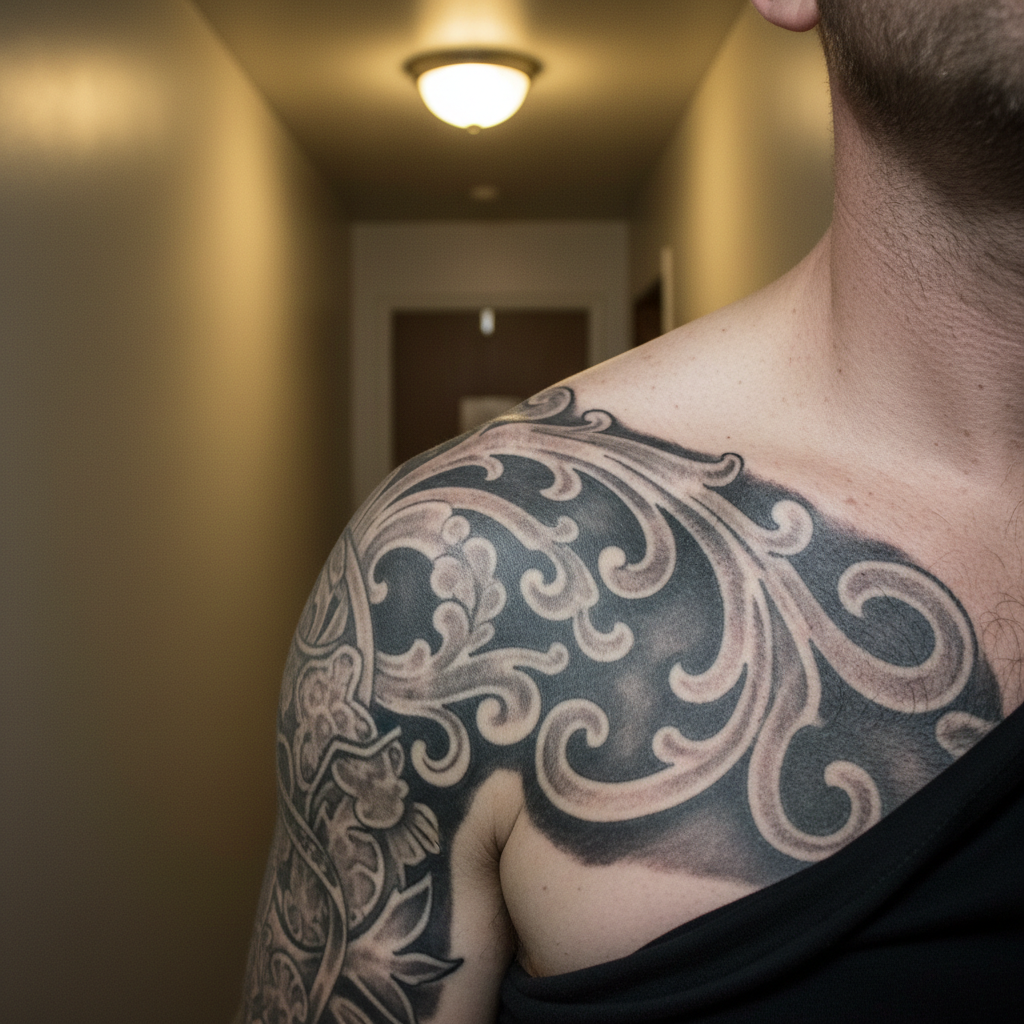
I went looking for other people doing the same thing, mostly to check I wasn’t imagining it. Same setup every time — same piece, same spot, same light, a couple of weeks apart.
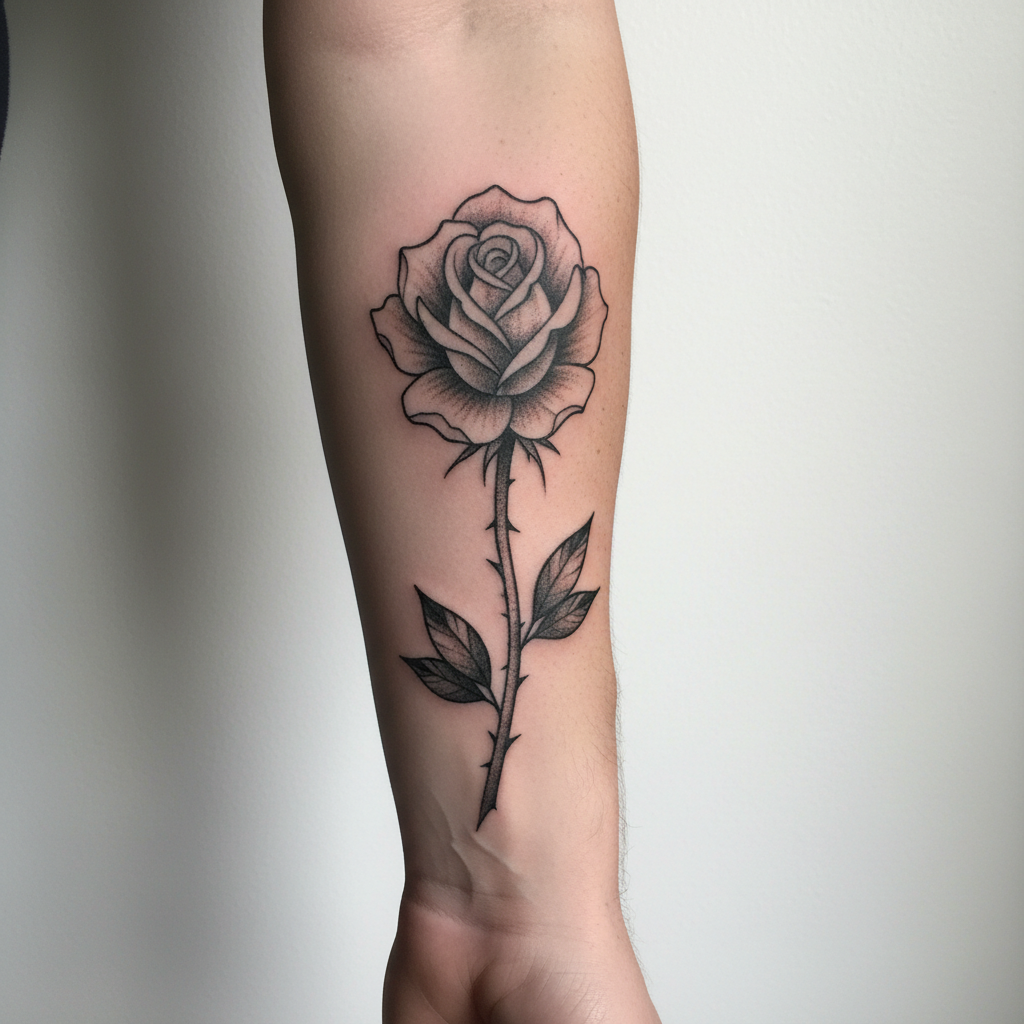 Before
After
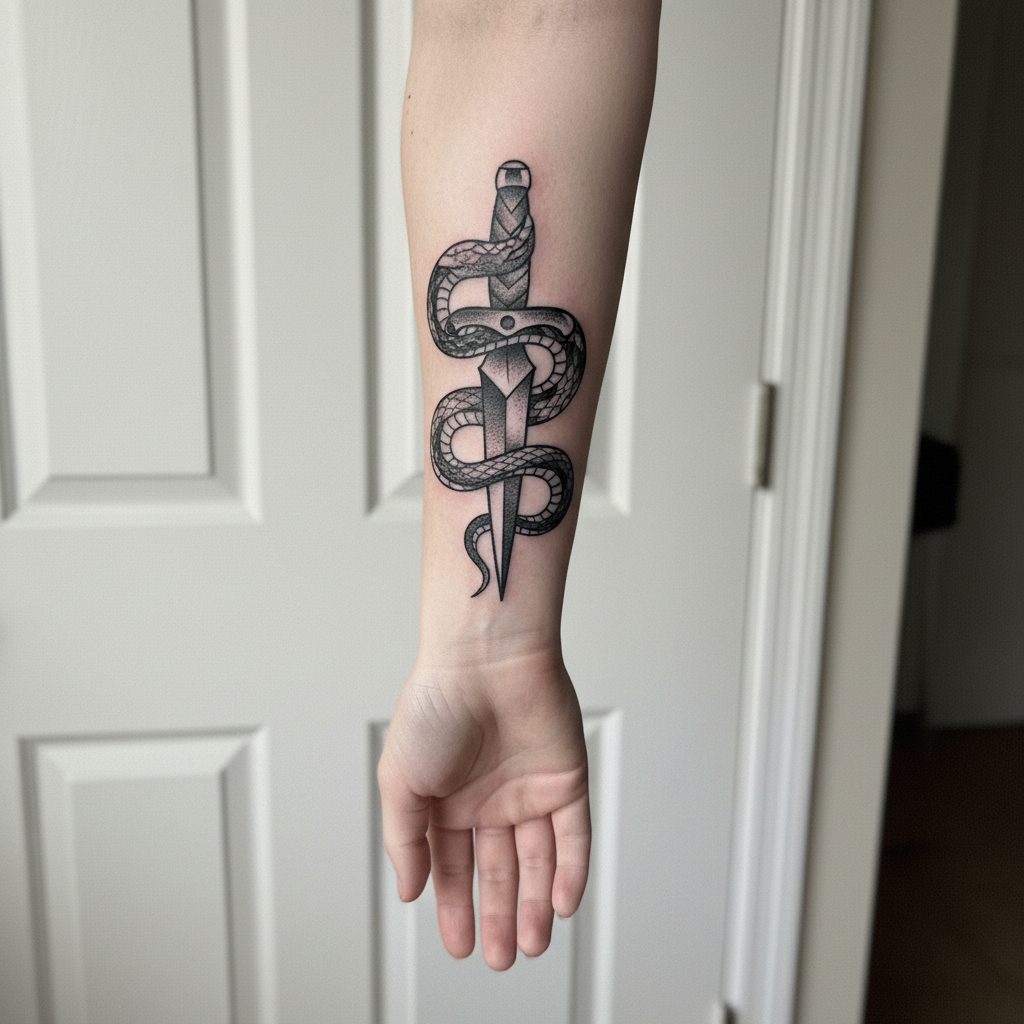 Before
After
Each pair is a single photograph of one tattoo — identical piece, framing and light — with the “before” frame simulating the dry, light-scattering surface described above. Results vary with skin condition, tattoo age and how consistently the balm is applied.
“But what if it doesn’t work for me?”
I get why that’s the first thought. Here’s what I’d say to the specific version of that doubt you probably have:
“My tattoo is really old — like 10+ years.”
“Mine’s from 2011 and I assumed it was just gone. Took longer than two weeks for me, more like a month, but it came back. It’s not about the age of the tattoo — it’s about how dehydrated the skin on top of it is right now.”
— Danielle
“I already tried lotion and balms, nothing worked.”
“Same. Every one of them either soaked in and vanished by noon or was clearly a healing ointment. This one is the first thing I’ve used that’s built for skin that healed years ago, and my arm still looks good at the end of the day.”
— Tomás
“I don’t want another step in my routine.”
“Honestly it’s not a routine. It lives next to my keys, I run it over my forearm while the coffee’s going. Ten seconds, once a day. It’s closer to putting on chapstick than anything skincare-ish.”
— Ryan
“This sounds like it’ll just make my skin greasy.”
“That was my worry — I wear dress shirts to work. It’s a solid balm, not an oil. Absorbs in a minute or two and there’s no residue on my sleeve. Nothing on my hands either, since you never touch it.”
— Meg
What this actually costs you
A single touch-up session at most shops runs $150–$500 depending on the size and detail of the piece, plus the time in the chair and the healing process all over again.
A stick of Etched Ink is $36.99, lasts roughly two to three months of daily use, and doesn’t put a needle anywhere near your skin.
Put differently: for less than the cost of one touch-up appointment, you get roughly a year of daily maintenance.
One touch-up session
$150–$500
Plus the chair time, the scabbing and the two weeks of healing.
A year of daily care
About four sticks
$36.99 each, ten seconds a day, no needle.
The actual choice here
You’ve got two options at this point.
Option one: keep doing what you’ve been doing. Keep reaching for the lotion that wears off in two hours, or the balm made for wounds instead of maintenance, or nothing at all — and keep covering up the piece you used to be proud to show off.
Option two: give your skin what it’s actually been missing this whole time, and see if the tattoo you paid for finally looks like the one you remember getting.
Etched Ink comes with a straightforward guarantee — if you don’t see a visible difference after using it daily, send it back.

Etched Ink
Tattoo Balm Tube
Daily maintenance balm for healed tattoos. 15g stick, roughly two to three months of use.
$36.99
- Visible difference or send it back
- All natural — petroleum-free, paraben-free, no artificial fragrance
- Ten seconds a day, no greasy hands
In stock · Ships fast · Visible difference or send it back
A few comments from people who’ve used it
-
“Was skeptical as hell but my sleeve looks better than it has in 3 years. Wish I’d found this before I almost paid for a touch-up.”
Derek M.
-
“Didn’t expect a stick balm to actually make a difference this fast. Applying it takes like 10 seconds in the morning.”
Priya K.
-
“My tattoo artist actually asked what I was using on it. That was a good day.”
Alex R.
Advertorial. This is one customer’s account of using Tattoo Balm Tube; individual results vary depending on skin condition, tattoo age and how consistently the balm is applied. Not a medical treatment — for irritated, broken or freshly tattooed skin, follow your artist’s aftercare instructions.
Tattoo Balm Tube
$36.99 · ~2–3 months of daily use